

◆ Architecture
■ Master Planning
● Interior Design
■ Master Planning
● Interior Design

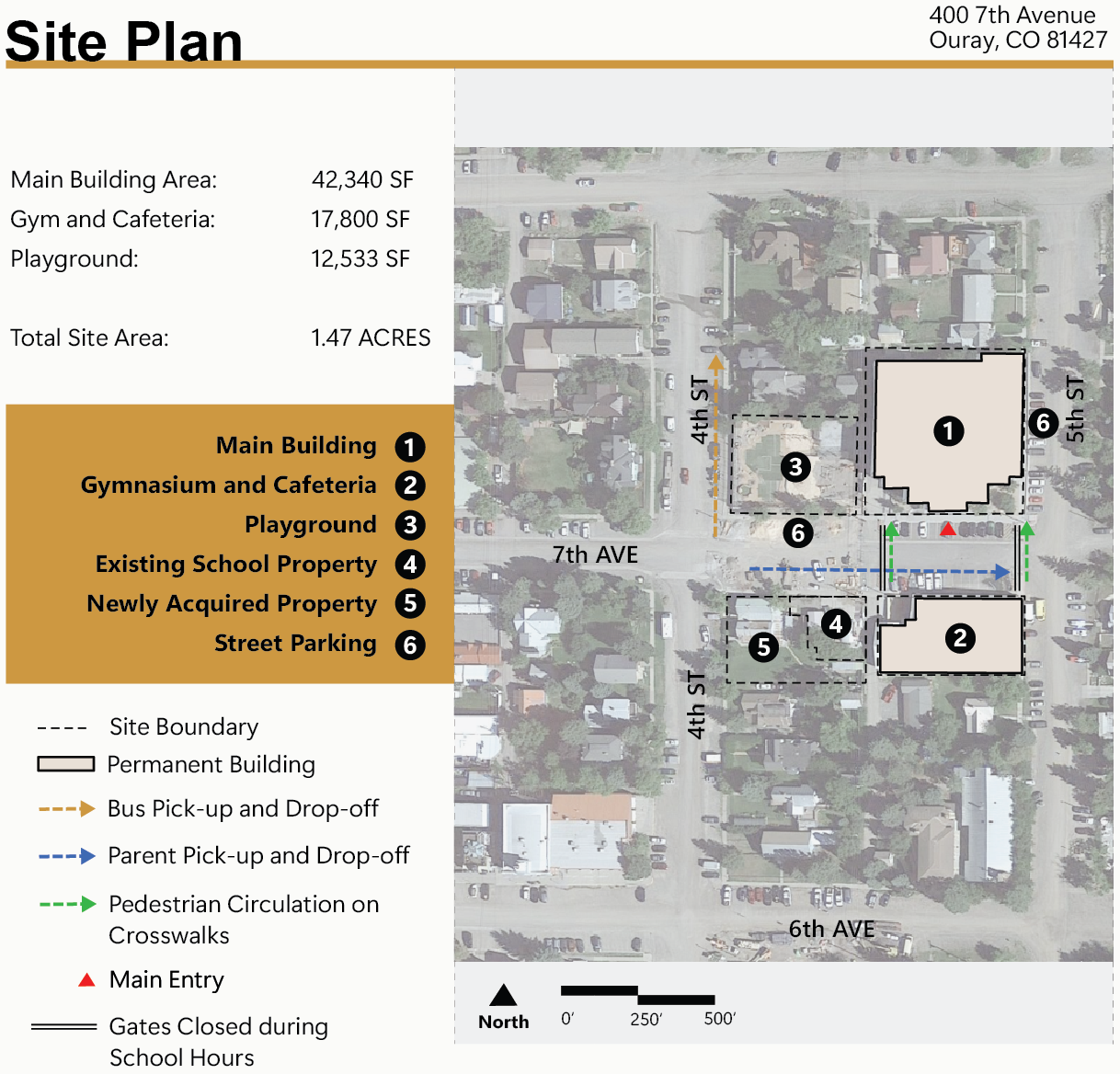
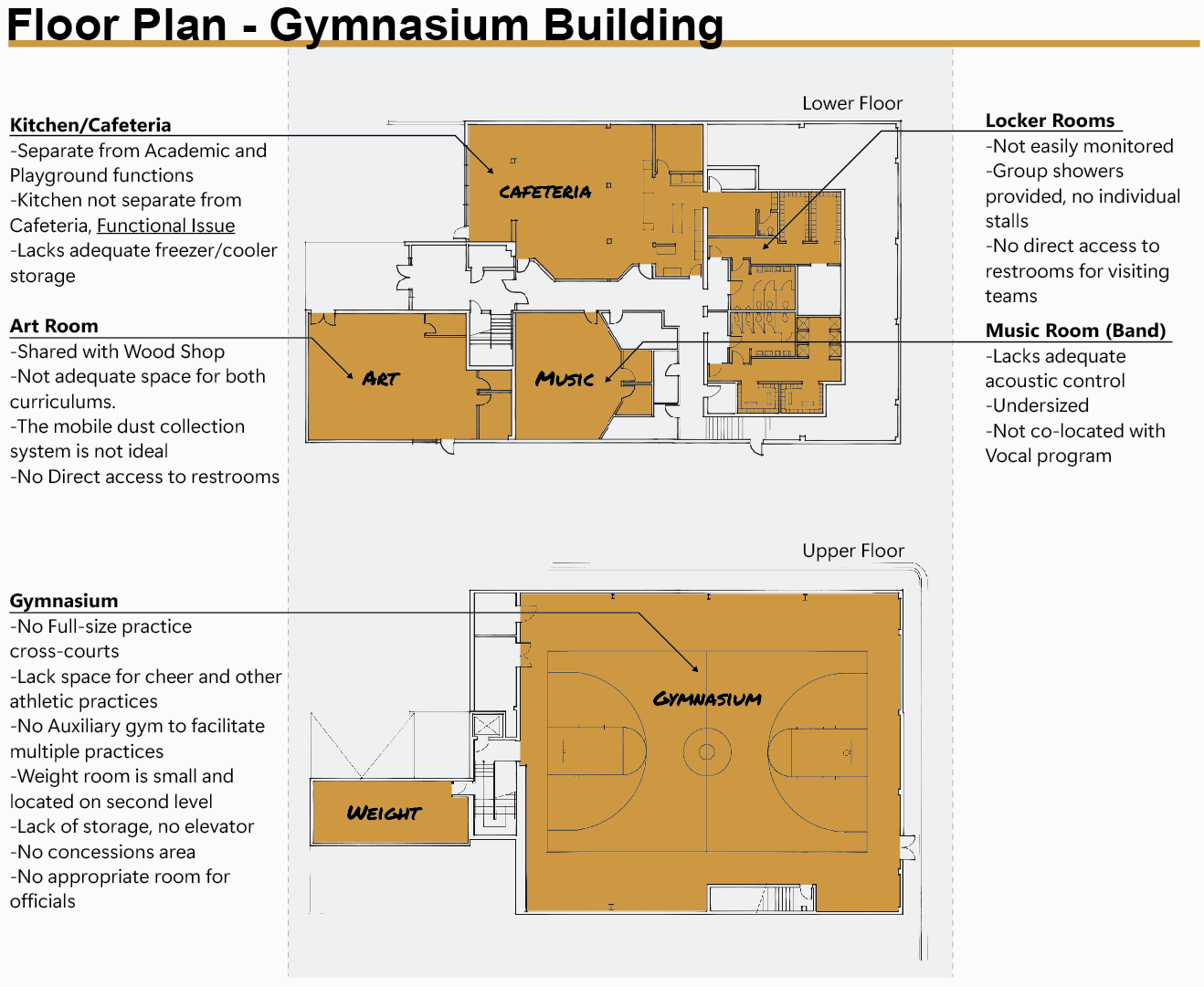
Educational Adequacy Assessments measure how well the facility supports the instructional program in the school. This is not an assessment of the physical condition of the school- the roofing, the windows, etc., which rates the various building systems. This is an assessment of the learning spaces compared to the program needs at that school. For example, if a district's music program includes an elementary component, each elementary school should have a music room with an appropriate learning environment, good acoustics, and space to store instruments or other equipment.
For each type of instructional space, the assessment includes four components:
In addition to the instructional Spaces, the adequacy assessment also includes the exterior of the building, e.g., traffic patterns, parking and access to the school, safety issues (lighting, signage, and secure entrances), play and athletic areas, and infrastructure that supports technology readiness.
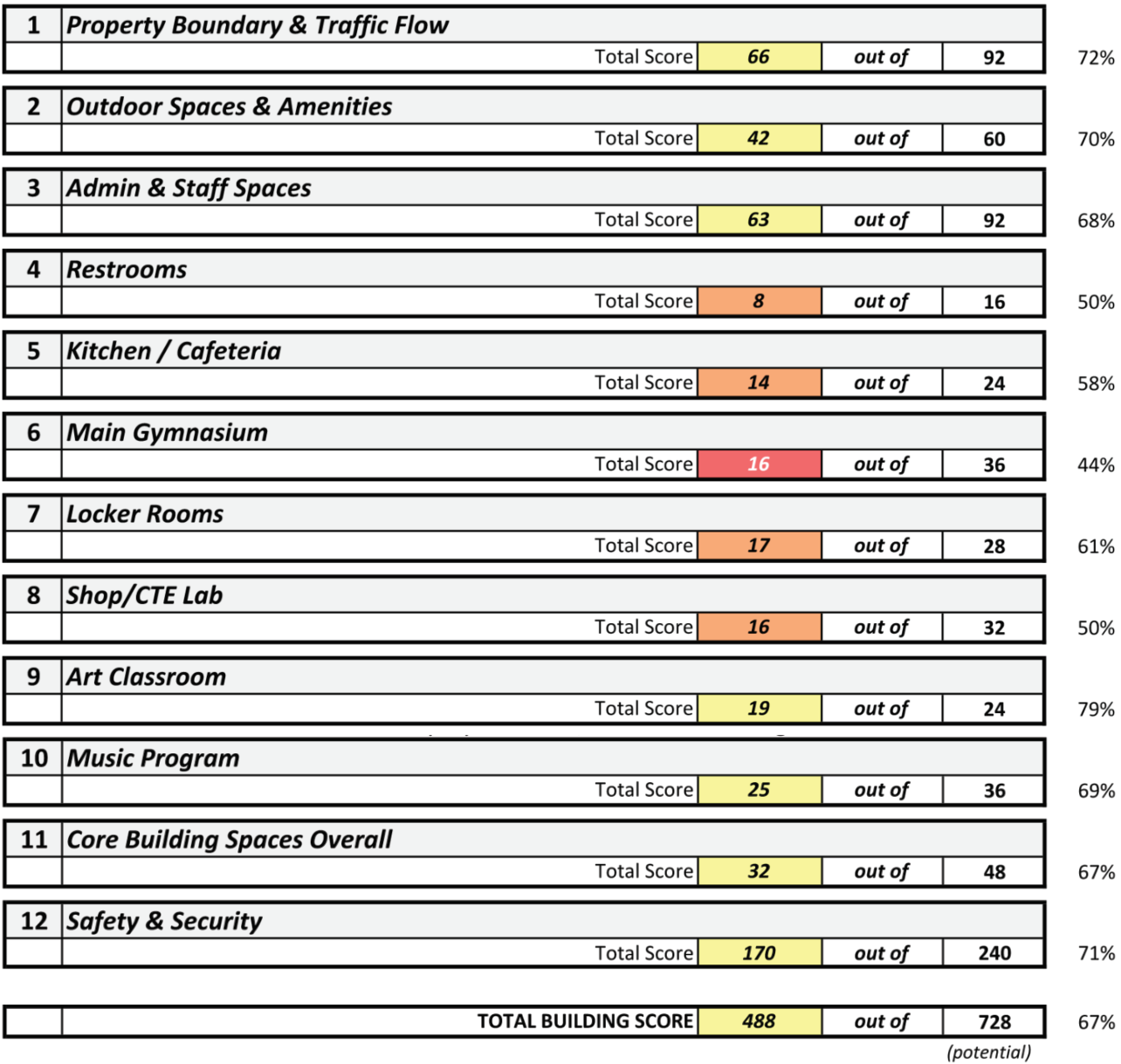
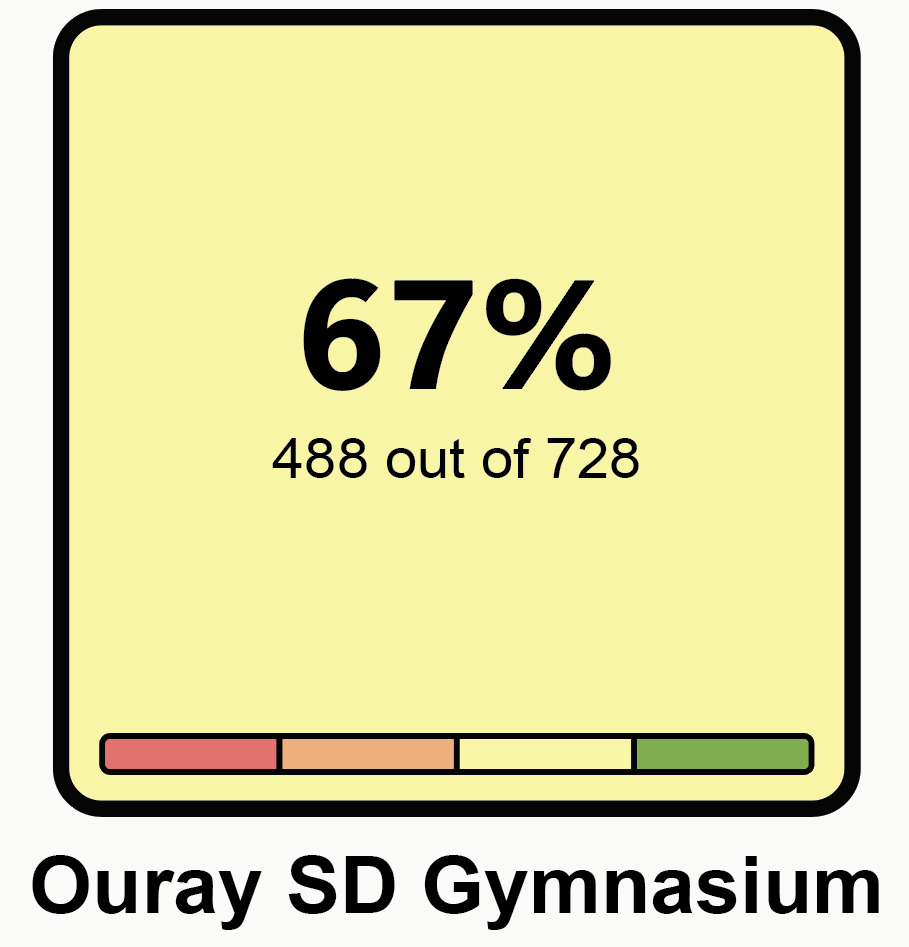
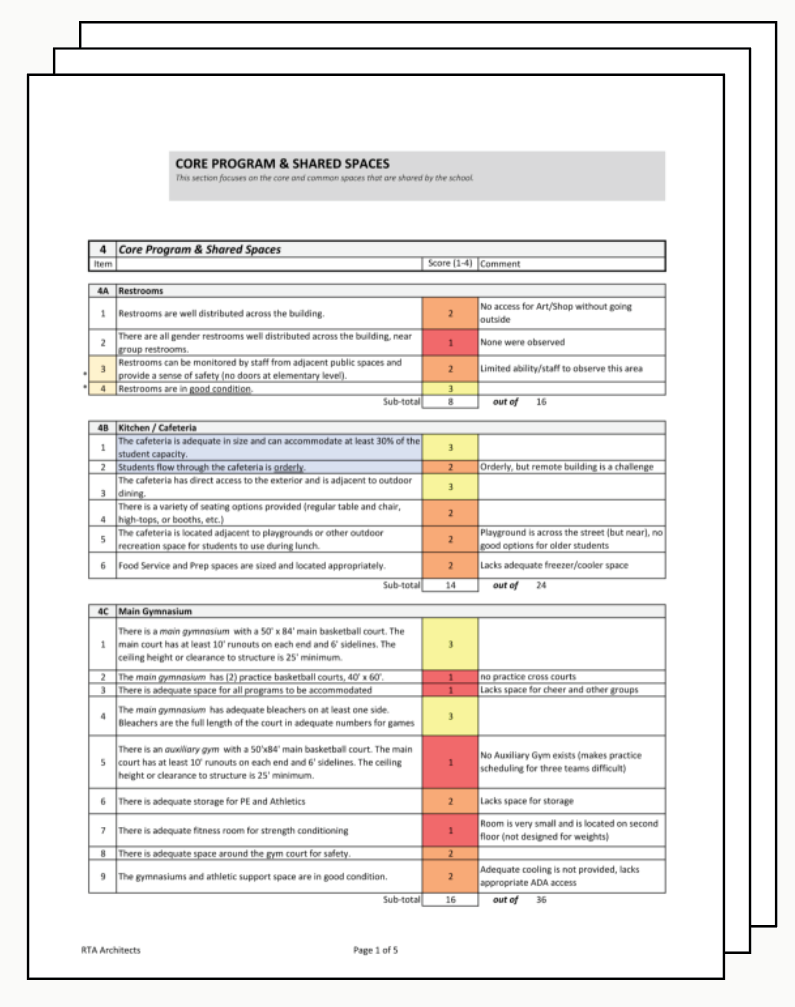

The Division of Capital Construction – Facility Insight program conducts Facility Condition Assessments on Colorado's public schools. The Facility Insight program supports the Capital Construction Assistance Board and the Division with data on facility needs.
Facility Insight includes an in-house team of assessors who continuously conduct state-wide facility assessments of all public school educational facilities. Assessments are based on condition and adequacy. The school condition analysis includes all the major building systems - roof, plumbing, heating, etc. The adequacy survey examines how well the buildings function for their intended purposes. The Facility Insight mission is to continuously obtain accurate and consistent school facility data for every public school and to be a state-wide resource for that data. Having an accurate state-wide inventory of all school facilities will guide the state in making informed decisions when evaluating BEST grant applications.
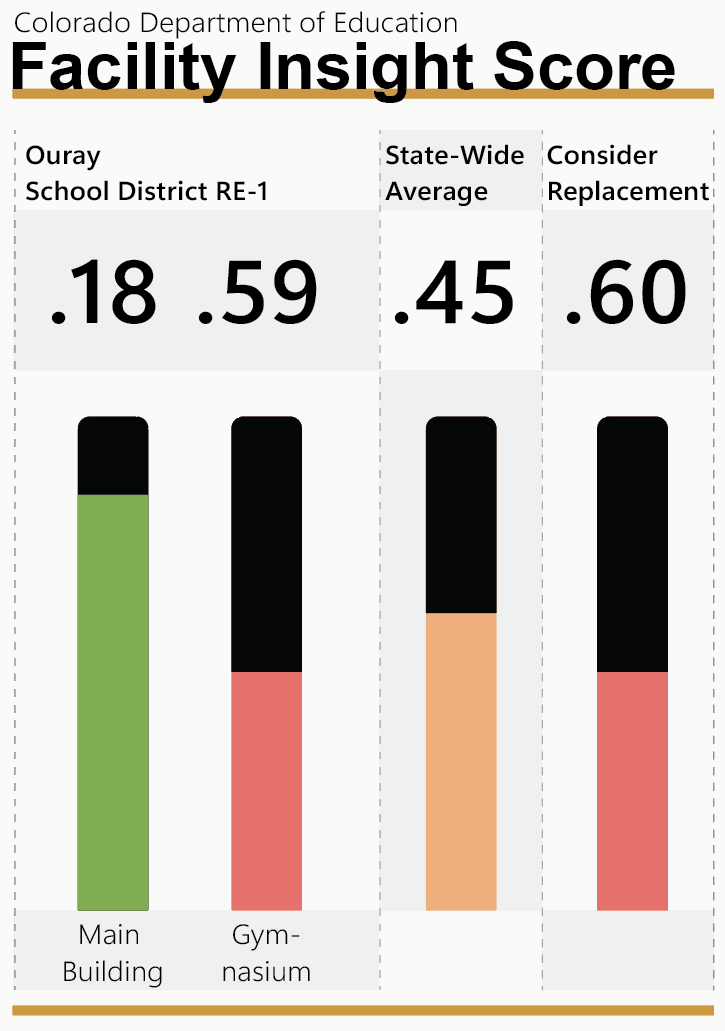
It is imperative to the master capital planning process that the condition of the existing district facilities is accurately assessed and objectively quantified. The following were steps taken to accurately assess and quantify the condition of the existing facilities.
• Review facility condition information: Existing building drawings and documents were reviewed and compared with existing conditions. With the help of district staff, already occurring issues were also identified and documented.
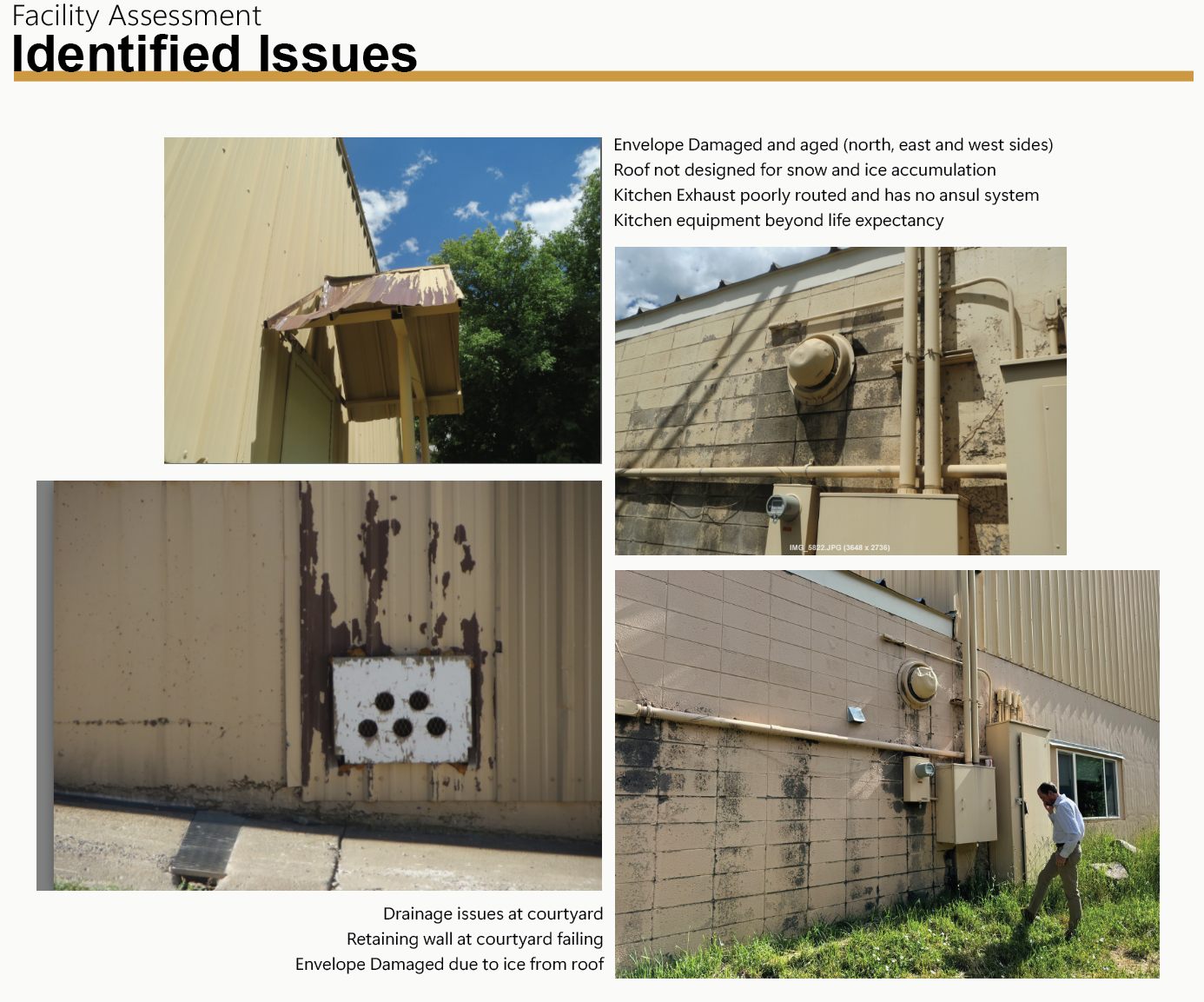
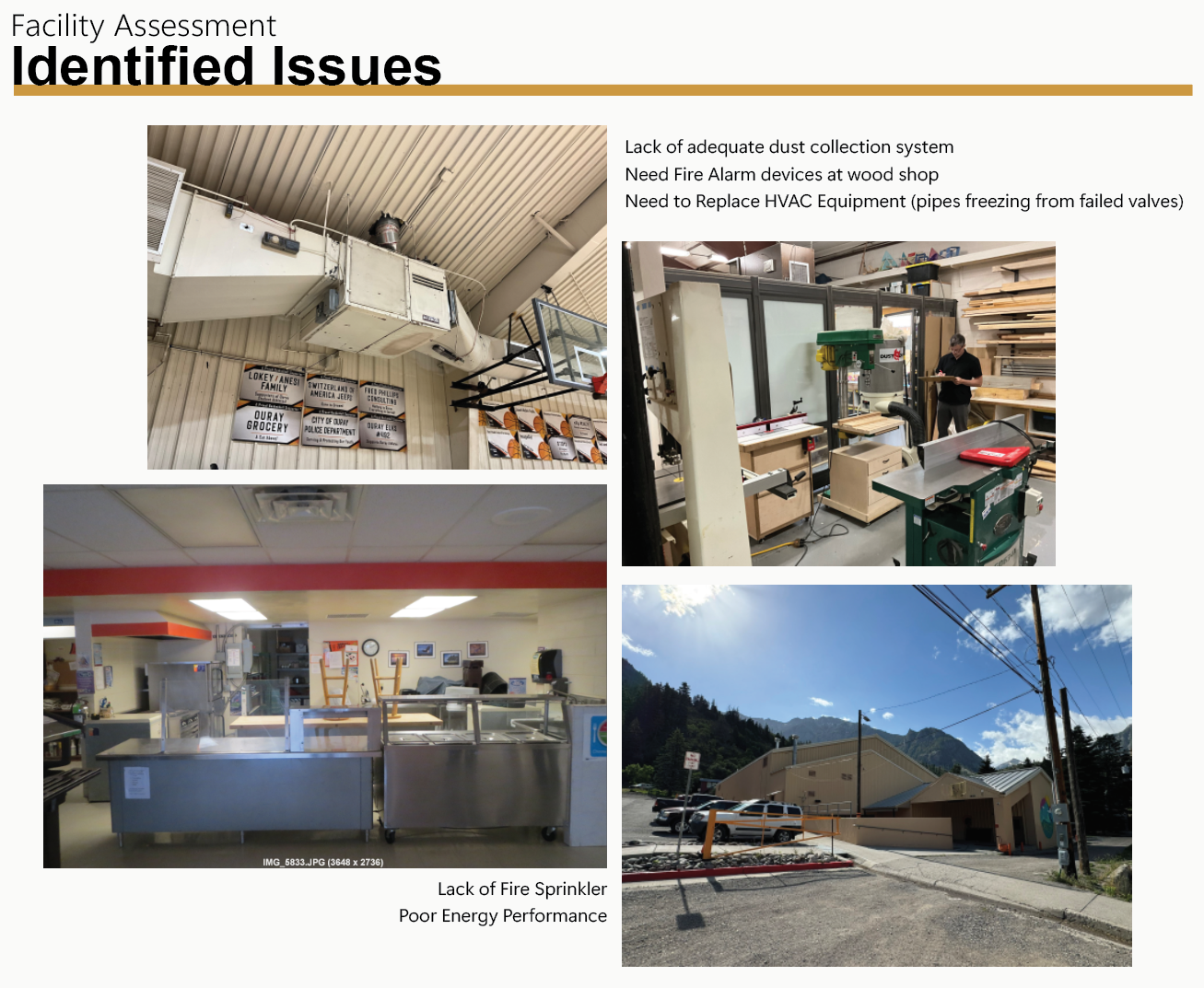
• Identify Current Problems: The assessment team included architects, engineers, and contractors familiar with the facilities in Ouray School District. Through facility walk-throughs and observations, the assessment team reviewed and tabulated the existing conditions of the site, building, and MEP systems which revealed a list of attributes and deficiencies.
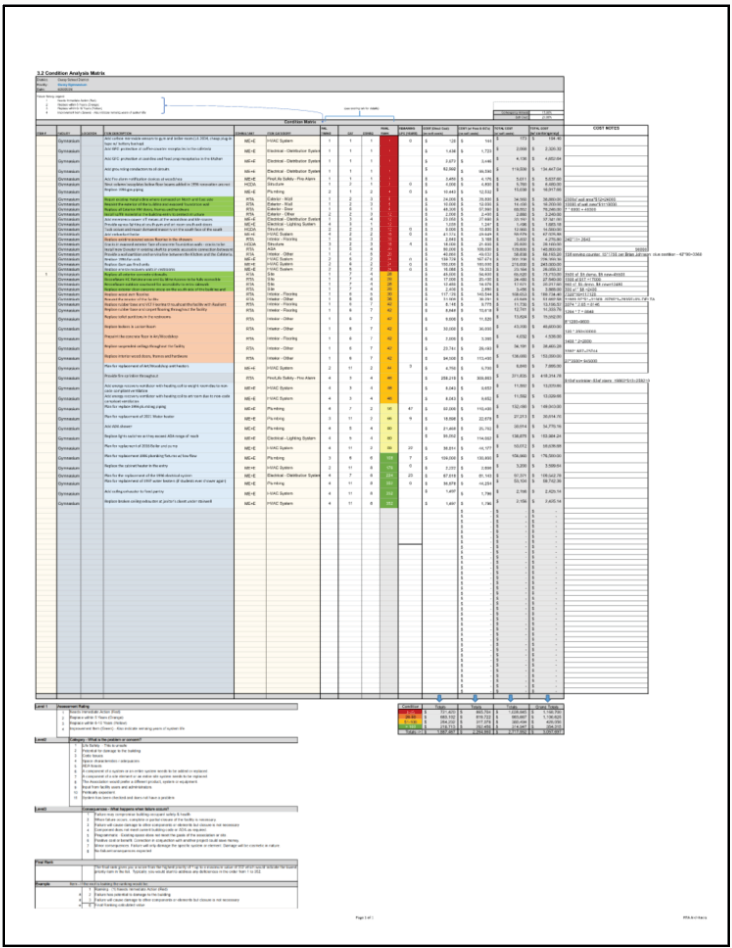
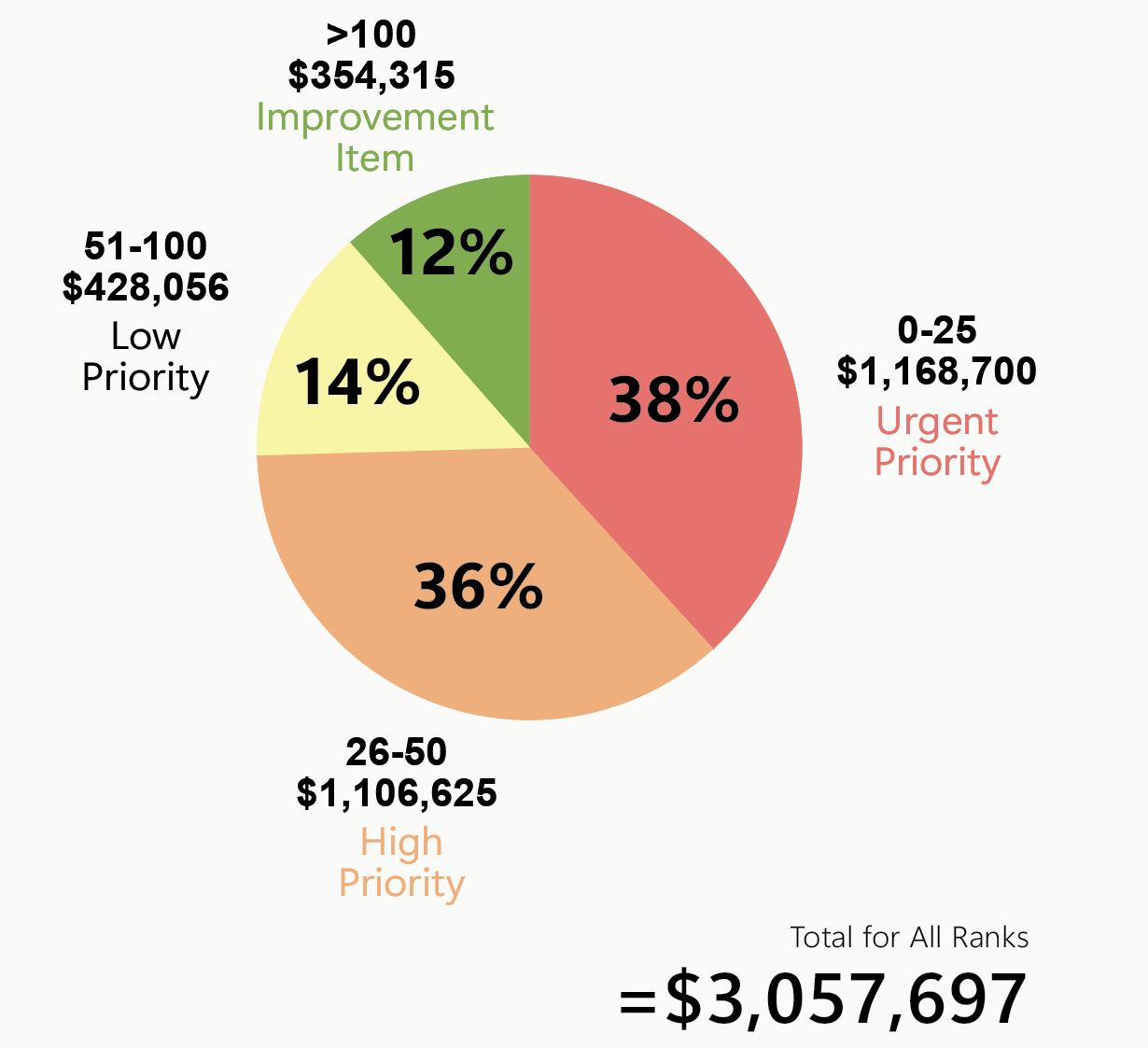
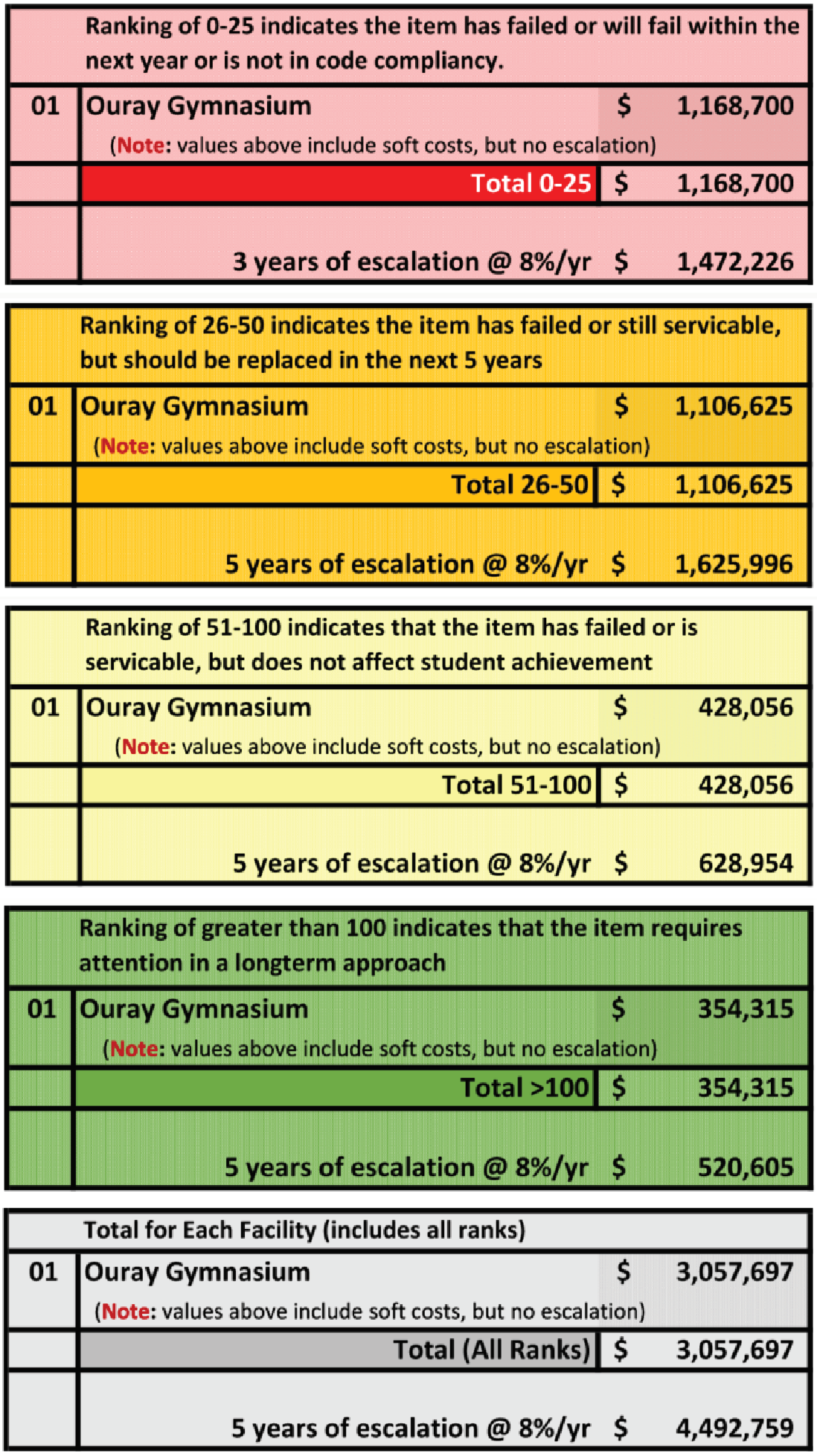
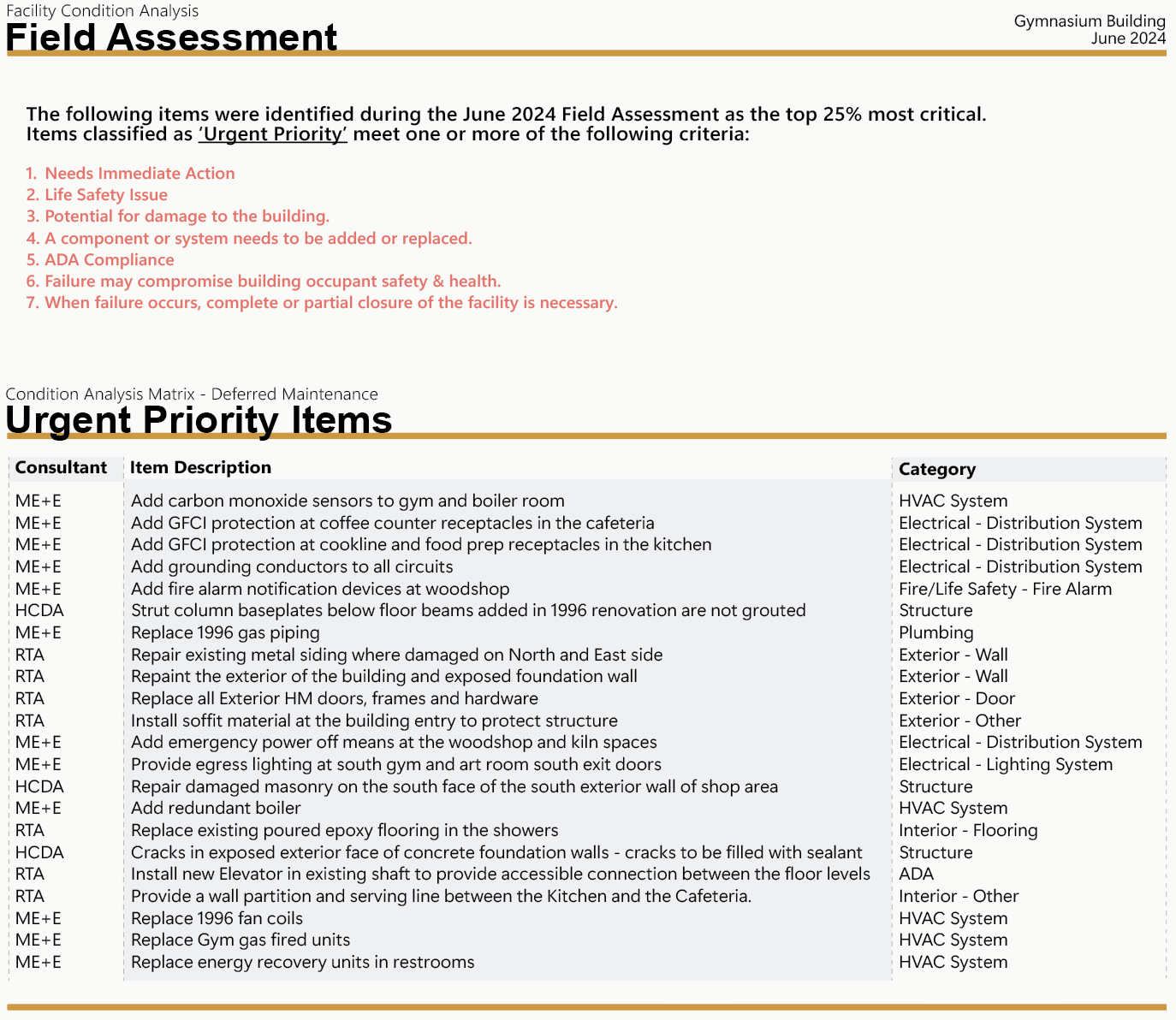
• Evaluate and prioritize deficiencies: The facility assessment broke down the deficiencies into detailed individual items that can be evaluated for cost and scored based on specific criteria. Each deficiency item was given a score based on a mathematical calculation of three levels of criteria:
Thank you for taking the time to review and consider our Facilities Master Plan. Share your thoughts by email with us at